
Access Anderson County Arrest Records
Anderson County arrest records are available through the Sheriff's Office, the Clerk of Court, and several online tools. Located in the northwestern corner of South Carolina near Lake Hartwell, Anderson County has a population of about 205,000. The county runs its own public access system called ACPASS, which gives residents a way to search local records. Court records for criminal cases are also available through the statewide Public Index. Whether you need a recent booking log or an old case file, Anderson County provides multiple ways to search for arrest records.
Anderson County Quick Facts
Anderson County ACPASS Record Search
Anderson County stands out from other South Carolina counties because it runs its own records portal. The Anderson County Public Access System and Services (ACPASS) gives the public online access to a range of county records. The system covers probate court records and other official filings. You can search by name or case number to pull up records tied to Anderson County.
The image below shows the ACPASS portal, which is the main entry point for searching Anderson County public records online.
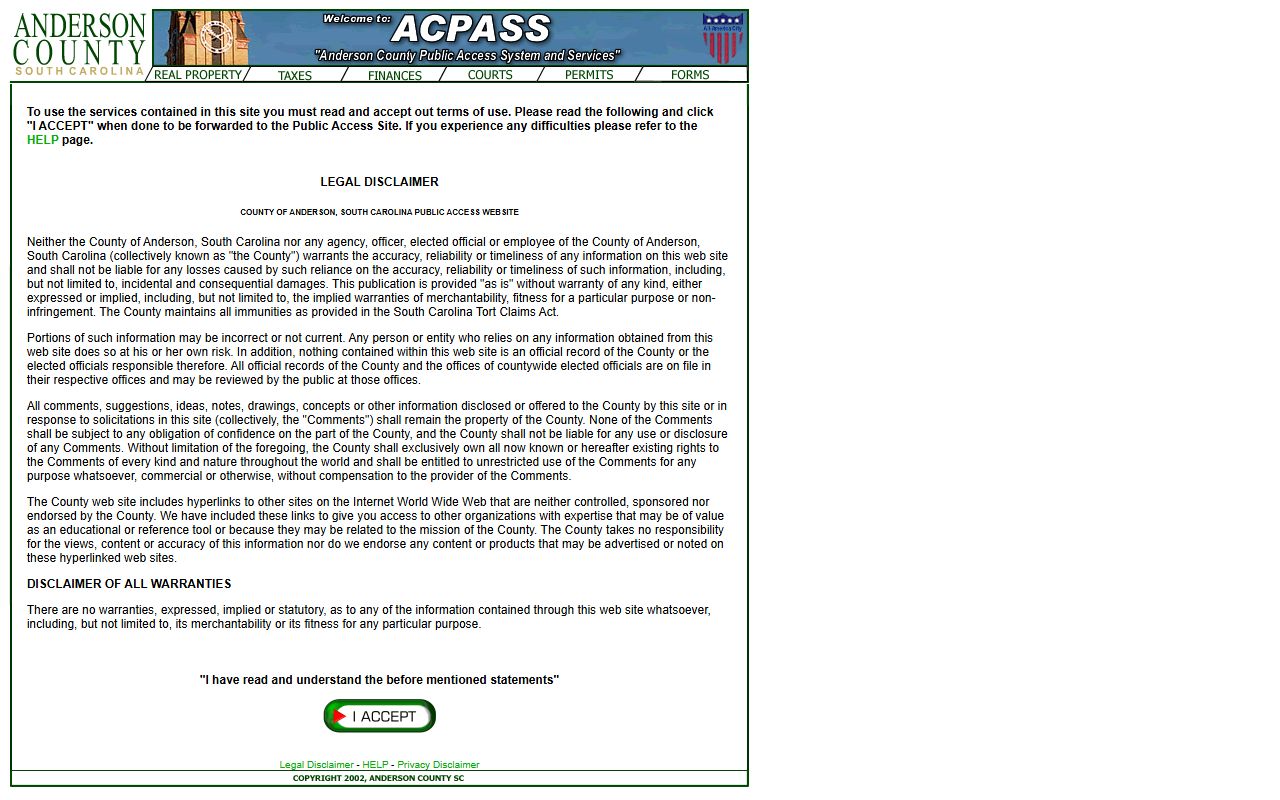
ACPASS may require an account for some searches. Basic lookups are available to all users without a fee.
The Anderson County Clerk of Court also keeps criminal case files. The Clerk's Office does not run official background checks, but it gives the public access to court records. You can view case files at the courthouse during normal hours. For certified copies, bring your ID and be ready to pay a small fee.
Anderson County Sheriff Booking Records
The Anderson County Sheriff's Office is the largest law enforcement agency in the county. Deputies patrol the rural areas and handle arrests outside city limits. Every arrest generates a booking record at the Anderson County jail. These records include the person's name, charges, mugshot, bond amount, and court date.
The image below shows the Anderson County Sheriff's Office website, which provides access to crime maps, calls for service data, and arrest information for Anderson County.

The Sheriff's website includes links to calls for service maps filtered by incident type, time, and location in Anderson County.
Under S.C. Code 30-4-30(d), the jail roster for the past three months must be available on demand. You can walk in and ask for it without a written request. For arrest reports and other detailed records, submit a FOIA request under S.C. Code 30-4-10. The Sheriff's Office must respond within 10 business days.
The Anderson Police Department handles arrests within the city of Anderson. Their records are separate from the Sheriff's records. If the arrest took place in town, contact the police department for the report.
Note: Crime data from both the Sheriff's Office and the Anderson Police Department may overlap in areas near the city border.
Anderson County Criminal Case Records
Criminal cases in Anderson County go through the magistrate court or the circuit court. Each court hearing adds to the case file. The Clerk of Court stores these files. You can find charges, pleas, motions, and final rulings for any case.
The statewide South Carolina Judicial Branch Case Records Search connects to the Public Index for every county. Use it to search Anderson County criminal records by party name or case number. The tool is free for basic case data. Results show docket entries, hearing dates, and case outcomes. Certified copies require a fee from the Clerk of Court.
State databases add more options for searching arrest records tied to Anderson County. The SLED CATCH system provides a statewide criminal history check for $25 plus a $1 online fee. You need the person's name and date of birth. CATCH shows arrests and dispositions from all South Carolina counties, not just Anderson. The SCDC Inmate Search covers state prison inmates, and the SCDPPPS offender search tracks people on probation or parole.
Clearing Records in Anderson County
Some arrest records in Anderson County can be removed through expungement. Under S.C. Code 17-1-40, when charges are dismissed or the person is acquitted, all arrest data must be destroyed. Mug shots, fingerprints, and booking files are erased. No record of the charge can stay in any Anderson County or state database.
Minor convictions may also qualify for expungement under S.C. Code 22-5-910. The crime must carry a maximum penalty of 30 days or a $1,000 fine. The person must wait three years with no new convictions before asking the circuit court to erase the record.
South Carolina Legal Services offers free information on how to pursue expungement. Anderson County residents can use these tools to find out if their records qualify for removal. The South Carolina Sex Offender Registry is a separate database that tracks registered offenders and is not affected by expungement of other records.
How to Get Anderson County Arrest Records
Anderson County gives you multiple options for finding arrest records. Here is a quick guide to the main paths:
- Use ACPASS for online Anderson County record searches
- Visit the Clerk of Court to view criminal case files in person
- Request booking records from the Anderson County Sheriff's Office
- Contact the Anderson Police Department for city arrest reports
- Search the statewide Public Index for free court case data
- Run a SLED CATCH check for a full criminal history
Fees vary by agency and document type. Plain copies are cheaper than certified ones. The VINE system is free and lets you track the custody status of anyone arrested in Anderson County. Register for alerts by phone, email, or text.
Cities in Anderson County
Anderson County includes the city of Anderson and several smaller towns. Arrests within city limits are handled by local police, while the Sheriff covers the rest of the county.
The city of Anderson has its own police department. County-level arrest records are managed by the Anderson County Sheriff's Office.
Nearby Counties
Anderson County borders several other South Carolina counties. If an arrest occurred near a county line, the booking may be in one of these neighboring jurisdictions.