
Lancaster County Arrest Records
Lancaster County arrest records are stored by the Sheriff's Office and the Clerk of Court in Lancaster. This county sits along the North Carolina border and has seen steady growth in recent years. The Sheriff handles law enforcement across most of the county, and all criminal case files end up at the courthouse. You can search Lancaster County arrest records through free online court tools or by visiting the Clerk's office. Booking logs track recent arrests, while court files cover the full case from start to finish. State databases also hold arrest data from Lancaster County.
Lancaster County Quick Facts
Lancaster County Sheriff Booking Data
The Lancaster County Sheriff's Office runs the detention center and handles most arrests outside city limits. When someone is booked into the Lancaster County jail, a record is created. It shows the person's name, charges, bond amount, and booking date. Deputies patrol the highways, rural roads, and communities across the county.
Indian Land, which is one of the fastest growing areas in South Carolina, falls within Lancaster County. The town of Lancaster also has its own police force. Arrests by any agency in the county go through the same court system. The detention center in Lancaster holds inmates from all local agencies. Call the Sheriff's Office if you need to check on a current inmate or get details about a recent booking in Lancaster County.
Lancaster County Court Arrest Records
Criminal cases from arrests in Lancaster County are filed with the Clerk of Court at the courthouse in Lancaster. The Clerk keeps all case files, including warrants, charging sheets, hearing records, and final orders. These are public records under S.C. Code 30-4-10.
The screenshot below shows the Public Index for the South Carolina courts, which includes Lancaster County criminal case data.
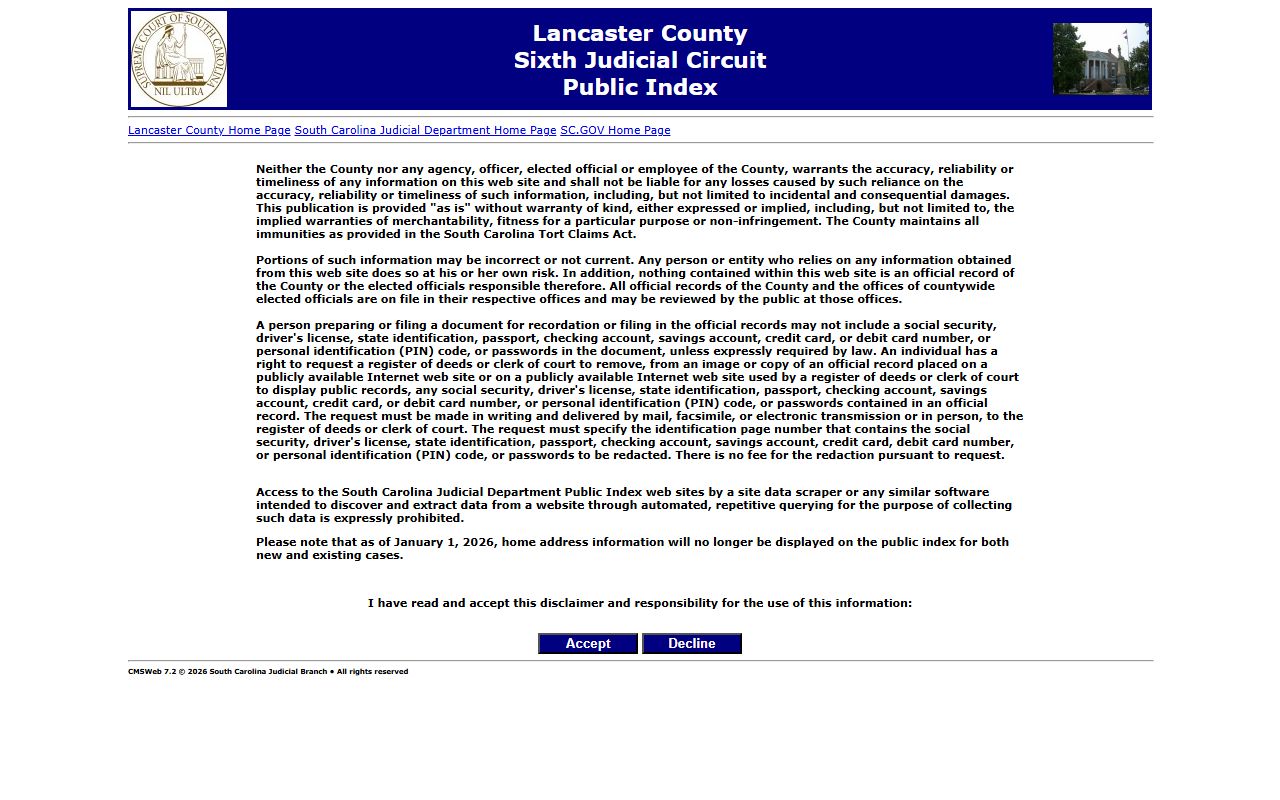
Search the Lancaster County Public Index by name or case number. The system displays charges, court dates, and case outcomes for criminal matters in Lancaster County. Basic case information is free. If you want copies of specific documents, contact the Clerk of Court. Under S.C. Code 30-4-30(d), copy fees may apply but the records must be provided to the public.
Note: The Public Index covers cases from magistrate court, general sessions, and other divisions in Lancaster County.
Ways to Find Lancaster County Arrest Records
The Public Index is the best free tool for court-level arrest records in Lancaster County. It works from any computer or phone. Just type in a name and review the results. Each entry includes the case number, charges, and status.
For statewide searches, two tools stand out. The SC courts case search lets you look across all counties at once. This is useful if you think the arrest happened near the Lancaster County border. The SLED CATCH system gives a formal criminal history report. It pulls from every agency in South Carolina. There is a fee for the CATCH search, but it provides the most complete view of someone's arrest history.
In-person visits to the courthouse in Lancaster are another option. Bring a valid ID and ask the Clerk's staff to search their system. They can pull up records and print copies for you. Older records from Lancaster County may require extra time to locate if they have not been fully digitized.
What Lancaster County Records Include
An arrest record from Lancaster County contains the facts tied to the arrest itself. The person's name, date of birth, and address are listed. The arresting officer and agency appear in the record. Each charge includes a statute number and brief description of the offense. The date and time of arrest are noted.
Once the case moves to court, the file grows. It may include:
- Bond amount and conditions
- Attorney information for both sides
- All hearing dates and courtroom assignments
- Plea details if the defendant entered a plea
- Sentence or fine if there was a conviction
- Probation terms if ordered by the judge
Lancaster County court files also cross-reference with state systems. If the person was placed on probation, the SC Probation and Parole offender search will show their status. If they went to prison, the Department of Corrections inmate search has their record. These state tools extend what you can learn from a Lancaster County arrest record.
Expungement of Lancaster County Arrests
Certain arrest records in Lancaster County can be removed from public view. South Carolina law allows expungement for cases that ended in dismissal, acquittal, or certain first offenses. S.C. Code 22-5-910 covers first offense misdemeanor expungements. Other statutes handle drug-related charges and youthful offenders.
You file a petition with the court in Lancaster County. The judge reviews the charge, the outcome, and whether the legal conditions are met. If approved, SLED erases the record from their statewide files. The SC Legal Services expungement guide explains the full process. Review S.C. Code 17-1-40 for more on how arrest records are handled after expungement.
The process takes a few months from filing to final removal. Not every arrest qualifies. Felony convictions and certain violent charges are not eligible for expungement in Lancaster County or anywhere in South Carolina.
Lancaster County Victim Notification
Crime victims in Lancaster County can track inmates through VINELink. This free tool sends alerts when a person's custody status changes. You get a call, text, or email when someone is released from the Lancaster County jail or transferred to another facility.
The South Carolina Sex Offender Registry lists registered offenders in Lancaster County. It is free and public. Each entry shows the person's name, photo, address, and offense. This registry is maintained by SLED and updated as offenders move or re-register.
Note: VINELink covers all detention facilities in South Carolina, not just Lancaster County.
Nearby Counties
Lancaster County shares borders with several counties in the northern part of the state. If you are not sure which county handled the arrest, check the address where it happened. County lines set the jurisdiction for each case.